
Hunter's Moon First Person Perspective: How It Plays
Hunter's Moon first person perspective puts you in Lilith's escape. Explore eavesdropping, stealth, and the folk-horror details shaping a night of fear.
Jump to
How Hunter's Moon's First-Person Perspective Works
A lit window offers conversation, but knocking could bring trouble. The Hunter's Moon first person perspective places you in Lilith Thorne's position as she flees a witch hunt, making the village's ordinary doors and voices part of your search for safety. Understanding the Hunter's Moon first person perspective helps you approach its central challenge: listening for help while avoiding the people hunting you.
You play as an accused woman moving through a 17th-century English village, its surrounding woods, and its moors over one night. The Witchfinder General, the village magistrate, and a local huntsman pursue Lilith. Meanwhile, people behind closed doors carry on conversations that reveal their fears, grievances, and occasional willingness to help.
The camera gives that setup a personal frame. You approach households from outside, hear people who might reject you, and look for assistance in a community turning against you. The village becomes more than scenery between chase sequences.
| Feature | What it involves |
|---|---|
| Player character | Lilith Thorne, an accused woman fleeing persecution |
| Setting | A rural village in 17th-century England, with forests and moors |
| Time frame | One night under the Hunter's Moon |
| Main activities | Exploration, eavesdropping, asking for help, and evading hunters |
| Platform | PlayStation 5 |
Treat the Hunter's Moon first person perspective as an invitation to pay attention to individual encounters. A household conversation can matter as much as the path ahead, especially when it points toward someone who needs help or has something useful to offer.
Listen Before You Knock
Eavesdropping sits at the center of Hunter's Moon. Villagers have been instructed to remain indoors during the hunt, leaving Lilith outside while conversations continue behind windows. That arrangement gives you access to the community's private life without making you welcome inside it.
Listen before asking for help. Conversations offer context about the people behind a door, and some encounters lead to assistance or items. Knocking indiscriminately carries a risk: the wrong household can bring the Witchfinder General into the encounter.
The Hunter's Moon first person perspective makes these exchanges feel immediate because you occupy the space just beyond the conversation. You are close enough to hear domestic arguments and local worries, yet separated from the shelter those people enjoy.
The cast includes around 100 roles performed by 48 voice actors. That scale gives the village room for contrasting personalities rather than a single, uniformly hostile crowd. Some residents are frightened, some are unhelpful, and others can assist Lilith.
| Encounter | What you can learn or receive | How to approach it |
|---|---|---|
| Conversation inside a house | Household concerns and village stories | Listen before knocking |
| A resident willing to help | Assistance or an item | Pay attention to the exchange |
| A person needing assistance | A task connected to your search for help | Follow the request carefully |
| A traveler along the route | Another opportunity for interaction | Speak with them before continuing |
Let conversations finish when you are learning an encounter. Their value extends beyond atmosphere: recognizing who needs assistance helps you understand where to direct your own efforts.
The writing also makes space for humor. Everyday complaints and household friction continue alongside the persecution, giving the village a life beyond Lilith's immediate predicament. Take time to hear those exchanges. They explain the community you are trying to survive, including the uncomfortable distance between ordinary domestic life and the violence happening outside.
Stealth, Capture, and the Cost of a Mistake
Lilith's immediate objective is escape. You move between wooded areas, hamlets, and village streets while avoiding the torch-carrying men searching for her. Stealth and careful decisions support that escape, but encounters with residents remain necessary to finding help.
That creates a difficult balance. Staying away from everyone can mean missing assistance, while approaching the wrong door can expose you to danger. Caution needs to work alongside attention rather than replace exploration.
With the Hunter's Moon first person perspective, the pursuit stays connected to Lilith's situation. You hear the hunters speaking as they search and encounter the village from the position of someone being excluded and threatened. The horror comes from recognizable people exercising power over an accused woman.
Capture also matters beyond the immediate interruption. On PS5, being arrested can cost Lilith a key item and prevent a favorable ending. An escape from confinement therefore does not necessarily undo the consequences of being caught.
| Situation | Consequence to consider |
|---|---|
| Missing a helpful encounter | Losing access to something needed for a favorable outcome |
| Knocking at the wrong door | Drawing the Witchfinder General's attention |
| Being captured | Potentially losing a key item |
| Continuing past an opportunity | Being unable to return for a missed item |
| Relying on an earlier autosave | Having no option to manually reload that earlier point |
Take those consequences seriously before rushing through unfamiliar encounters. The PS5 game uses an autosave structure that can leave a mistake behind you without a convenient earlier checkpoint to select.
At the same time, distinguish pursuit from progression. A stretch without immediate danger does not mean you have collected everything needed for the ending you want. Listen for requests and keep track of unresolved assistance as carefully as you watch for hunters.
Why the Puppet-Like Visuals Suit First Person
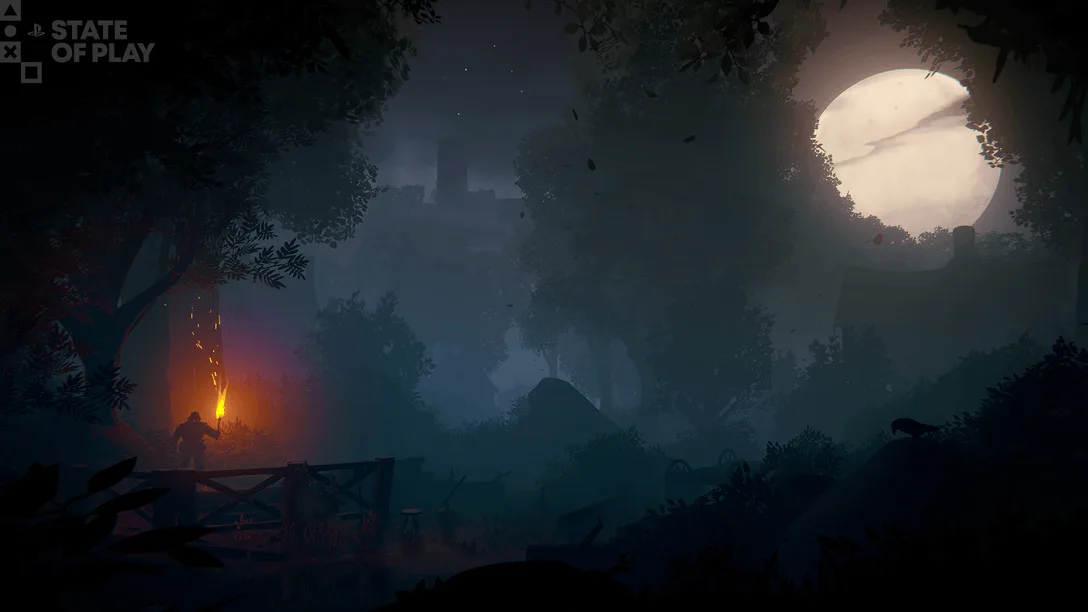
Hunter's Moon combines historical subject matter with a stylized presentation inspired by immersive theater and stop-motion animation. Its characters do not depend on elaborate facial animation to communicate every exchange. Masks, darkness, silhouettes, and windows help define how you encounter them.
The Hunter's Moon first person perspective gives those choices a clear purpose. Mummers appear in folk costumes and masks, hunters occupy shadowy spaces, and villagers remain partially obscured inside their homes. You meet people through the visual boundaries of the village rather than receiving an unrestricted view of every performance.
That approach supports the story's social distance. A window lets you hear someone's private concerns while still keeping Lilith outside. A mask presents a figure whose costume belongs to a communal tradition, even as the surrounding night becomes threatening.
| Visual or audio element | Its place in the experience |
|---|---|
| Masked mummers | Folk costumes contribute to the night's festival atmosphere |
| Villagers behind windows | Household scenes unfold across a physical barrier |
| Stop-motion-style animation | Character movement supports the handcrafted presentation |
| Orange-red torchlight | The hunt brings warm illumination into the dark landscape |
| Folk songs and voiced conversations | Music and speech give the village its character |
Notice the contrast between the landscape and the hunt. Green and brown woodland sits beneath a bright moon, while torchlight adds another strong color to the scene. The result gives you distinct things to watch even within the nighttime setting.
The sound deserves equal attention. Folk singing and extensive dialogue carry much of the game's personality. Listen for changes in subject and tone instead of treating speech as background noise; the same presentation that builds atmosphere also carries requests, warnings, and opportunities for help.
Practical Tips for Exploring the Village
The Hunter's Moon first person perspective rewards an attentive approach to the village's conversations and threats. Keep your immediate escape in mind while tracking the help Lilith still needs.
1. Make listening part of exploration
Pause at relevant windows and hear the exchange before deciding whether to knock. The game connects its village stories with assistance, so skipping dialogue can mean missing something useful.
Listen for a specific need or offer. A conversation becomes easier to act on when you understand what the person wants rather than simply remembering which house you visited.
2. Keep track of the four required items
Lilith needs four items for a favorable outcome. Track which ones you have acquired and which requests remain unresolved.
Use a short personal checklist if you find the household conversations difficult to remember. Record the request and whether you completed it, rather than relying on the general impression that you explored an area thoroughly.
3. Treat capture as a lasting setback
Avoid assuming that escaping custody restores your earlier position. Capture can remove a key item, changing what remains possible later in the run.
After an arrest, check what Lilith still carries before continuing with the same expectations. The immediate escape and the ending requirements are connected.
4. Resolve help before moving onward
Backtracking is restricted, so act on a useful request while you still have access to the relevant encounter. Do not leave an unfinished exchange solely on the assumption that you can return later.
This matters especially when an item initially seems disconnected from your escape. Assistance can become meaningful beyond the moment you receive it.
5. Prepare for a short but consequential journey
A playthrough can take roughly two hours, while repeated attempts add time. That compact length still leaves room for missed encounters and decisions with lasting effects.
Give the Hunter's Moon first person perspective time to work through its smaller moments. Hear the household argument, consider the request, and remember the person offering help. Those details connect the escape route to the people living along it.
Hunter's Moon launched on October 25 in North America and October 26, 2026, in other regions. Visit the Hunter's Moon PlayStation Store page to purchase the PS5 game.
FAQ
Does Hunter's Moon use a first-person perspective?
Yes. The Hunter's Moon first person perspective places you in Lilith Thorne's role as she explores a 17th-century village, listens at windows, interacts with residents, and escapes witch hunters.
What do you do during the game?
You explore forests and settlements, overhear household conversations, seek assistance, collect important items, and evade pursuit. Eavesdropping connects the village's stories with practical opportunities to help Lilith survive.
Is Hunter's Moon focused on supernatural horror?
Its central horror concerns human persecution and the fear of witchcraft. Lilith is an accused woman pursued by men who believe in the hunt. Folk traditions, religious beliefs, and village tensions shape the setting.
Can being captured affect the ending?
Yes. On PS5, capture can cost Lilith a key item and prevent a favorable ending. Escaping confinement does not necessarily recover that item, and the autosave system does not offer a manually selectable earlier checkpoint to undo the mistake.
Continue with
Hunter's Moon Folk Music: Inside Its Haunting WorldExplore Hunter's Moon folk music, its place in the PS5 game's witch hunt, and how songs, village voices, and eerie visuals shape your night in Yorkshire.More in Features
Hunter's Moon Item Uses: Key Items and Ending Risks
Learn Hunter's Moon item uses, why four key items matter for the good ending, and how missed encounters or an arrest can derail Lilith's escape. Plan now.
Hunter's Moon Stop Motion Animation: Style Explained
Explore Hunter's Moon stop motion animation, its puppet-inspired characters, eerie Yorkshire setting, and practical tips for navigating the PS5 witch hunt.
Hunter's Moon Knocking on Doors: Risks and Rewards
Hunter's Moon knocking on doors reveals quests, village secrets, and dangerous refusals. Learn how to read each encounter and protect your escape attempt.
Hunter's Moon NPC Behaviour: Read the Village's Fear
Understand Hunter's Moon NPC behaviour, read villagers' reactions, follow useful conversations, and recognize the risks of seeking help during the hunt.
Continue exploring
Join the community
Official channels for news, updates and player help: